D - Habits & measurement
White coat hypertension: why your reading spikes at the doctor

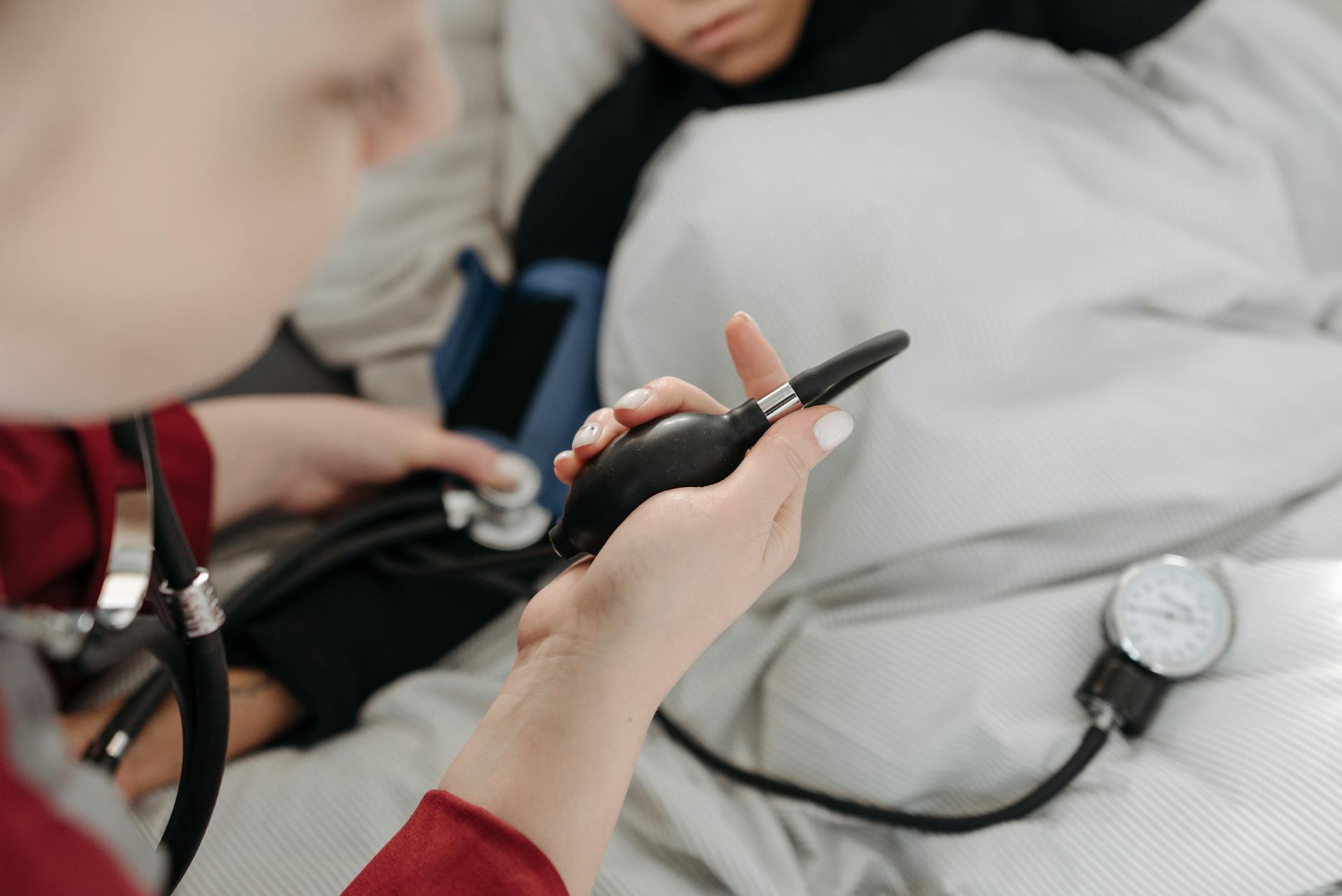
White coat hypertension is when your blood pressure reads high in a clinic or doctor’s office but stays normal when you measure it at home. The stress of a medical setting nudges the number up for a short time. It is common, usually not an emergency, and home monitoring is the best way to confirm it.
The name comes from the white coats doctors traditionally wear. For a lot of people, simply being in a medical environment, waiting to be seen, or worrying about the result is enough to push a reading several points higher than usual. That does not make the reading fake, but it can make a one-off clinic measurement misleading. This guide explains what white coat hypertension is, why it happens, whether it matters, and how to get a number you can trust.
What white coat hypertension means
White coat hypertension describes a specific pattern: your blood pressure is raised when a clinician measures it, yet readings taken at home or with a 24-hour monitor sit in the normal range. The American Heart Association (AHA) and the UK’s NHS both recognise this effect and note that out-of-office readings often reflect your true blood pressure more closely than a single rushed appointment.
It helps to know the categories your numbers are compared against. The AHA and the American College of Cardiology define adult blood pressure, measured in mmHg, like this:
- Normal: less than 120 systolic and less than 80 diastolic.
- Elevated: 120 to 129 systolic and less than 80 diastolic.
- Hypertension stage 1: 130 to 139 systolic or 80 to 89 diastolic.
- Hypertension stage 2: 140 or higher systolic or 90 or higher diastolic.
With white coat hypertension, your clinic reading lands in a raised category while your everyday readings do not. There is also a mirror-image pattern called masked hypertension, where clinic readings look normal but home readings run high. The AHA flags masked hypertension as the more concerning of the two, which is part of why measuring outside the clinic matters so much.
Why your blood pressure spikes at the doctor
Blood pressure is not a fixed number. It rises and falls through the day in response to activity, caffeine, sleep, and emotion. A medical appointment can tick several of those boxes at once: the rush to arrive on time, an unfamiliar room, anticipation of the result, and the simple act of being observed.
This short-lived rise is sometimes called the white coat effect. It is a normal stress response rather than a sign that something is wrong with your heart in that moment. The trouble is that a clinic visit is often the only time many people have their blood pressure checked, so a temporary spike can look like sustained high blood pressure. Technique adds to the gap too. Talking during the measurement, an unsupported arm, or skipping a rest period can each lift a reading, and these are easy to slip into during a busy appointment.
Is white coat hypertension dangerous?
This is the question that worries most people, and the honest answer is that it sits somewhere between harmless and high blood pressure. A single anxious reading is not an emergency. At the same time, research summarised by the AHA and Mayo Clinic suggests white coat hypertension should not simply be dismissed, because people with it appear more likely to develop sustained high blood pressure over time, and some studies link it to a modestly higher cardiovascular risk than consistently normal readings.
The practical takeaway is balance. There is no need to panic over one high number in a clinic, but it is worth confirming what your blood pressure does the rest of the time and keeping an eye on the trend. That way a genuine, gradual rise is caught early rather than hidden behind the assumption that it is “just nerves.”
How white coat hypertension is diagnosed
You cannot confirm white coat hypertension from clinic readings alone, because the clinic is exactly where the spike happens. The AHA and NHS recommend measuring blood pressure outside the medical setting, using one of two methods.
The first is home blood pressure monitoring, where you take readings yourself over a week or two with a validated upper-arm monitor. The second is ambulatory monitoring, where a small device worn for 24 hours records your blood pressure automatically through the day and night. If these out-of-office readings are consistently normal while your clinic numbers are raised, that pattern points to white coat hypertension. For the full technique, see our guide to measuring blood pressure at home.
What to do about white coat hypertension
Start by getting reliable home readings. Use a validated upper-arm monitor, rest quietly for five minutes, sit with your back supported and feet flat, keep the cuff at heart level, stay quiet, and take two or three readings a minute apart, then average them. Doing this at the same times each day gives a pattern your doctor can actually use. Our guides on the best time to take your blood pressure and how often you should check it cover building the routine.
It also helps to take the edge off clinic visits. Arriving a few minutes early, sitting quietly before the reading, and breathing slowly can lower the spike. Tell your clinician you tend to read high in the office and bring your home log, so the conversation is based on the full picture rather than one number. If you want to understand where a specific reading falls, our explainer on what a 120/80 reading means and the wider blood pressure readings guide break down the categories.
When to see a doctor
White coat hypertension is worth raising with a clinician even when your home numbers look fine, so they can decide whether ambulatory monitoring or follow-up is needed. Book an appointment if your home readings are also creeping into the stage 1 or stage 2 range, or if they climb over weeks.
Seek urgent help right away if you ever record a reading higher than 180 systolic and, or, higher than 120 diastolic. The AHA advises waiting five minutes and measuring again, and if it stays that high, contacting your doctor without delay. If a very high reading comes with chest pain, shortness of breath, numbness or weakness, vision changes, or difficulty speaking, call emergency services immediately. When in doubt about any reading or symptom, it is always safest to speak with a healthcare professional. This guide is general information, not a substitute for personalised medical advice.
Track your blood pressure free in CardioVibe
The simplest way to tell white coat hypertension from the real thing is to watch your numbers over time, away from the clinic. You can track your blood pressure free in CardioVibe, keeping a clear record to share at your next appointment. It supports your care rather than replacing it.
Frequently asked questions
Is white coat hypertension a real condition?
Yes. It describes a genuine, repeatable pattern where blood pressure rises in a medical setting but is normal elsewhere. The AHA and NHS both recognise it, and it is confirmed by comparing clinic readings with home or 24-hour ambulatory readings.
How do I know if I have white coat hypertension?
You cannot tell from clinic readings alone. The way to find out is to measure your blood pressure at home with a validated monitor, or to wear an ambulatory monitor for 24 hours. If those readings are normal while your clinic numbers are high, that points to white coat hypertension. Share the results with your doctor.
Can white coat hypertension turn into high blood pressure?
It can. Research summarised by the AHA and Mayo Clinic suggests people with white coat hypertension are more likely to develop sustained high blood pressure over time, which is why tracking the trend and following up with a clinician is sensible rather than assuming it will always stay normal.
How can I lower my blood pressure before a doctor’s appointment?
Arrive early, sit quietly for a few minutes, avoid caffeine and rushing beforehand, and breathe slowly while you wait. Staying still and not talking during the measurement also helps. Bringing a home reading log gives your clinician context if the office number still reads high.
Download CardioVibe
Take control of your blood pressure with small daily habits, and see exactly what's working as your readings improve.
Download CardioVibe
Keep every reading in one place, spot patterns early, and bring a clear history to your next GP appointment.