D — Habits & measurement
7 Mistakes That Ruin Your Home Blood Pressure Reading

Most home blood pressure reading mistakes come down to three things: how you sit, where the cuff sits, and what you did in the 30 minutes beforehand. Small errors like talking, a full bladder, or an unsupported arm can each add several mmHg to your number, according to the American Heart Association. Here are seven to avoid.
The most common blood pressure reading mistakes
Measuring your blood pressure at home is one of the most useful habits you can build, but only if the numbers are accurate. A reading thrown off by poor technique can make things look worse than they are, or hide a problem that needs attention. The good news is that every blood pressure reading mistake below is easy to fix once you know about it. For the full method, see our guide on how to measure blood pressure at home.
1. Skipping the five-minute rest
Rushing in from another room, sitting down, and immediately strapping on the cuff is one of the most common errors. The American Heart Association (AHA) recommends sitting quietly and resting for about five minutes before you measure. Activity, hurrying, or stress in the moments before can leave your reading elevated and unrepresentative of your true resting pressure. Build the pause into the routine: sit, relax your shoulders, breathe normally, then begin.
2. Sitting in the wrong position
Posture has a surprisingly large effect. The AHA advises sitting with your back supported against a chair, both feet flat on the floor, and your legs uncrossed. Slouching on a sofa, perching on a stool with no back support, or crossing your legs can all nudge the reading upward. A dining chair at a table is usually a better choice than the couch for this reason.
3. Letting your arm dangle or sit too low
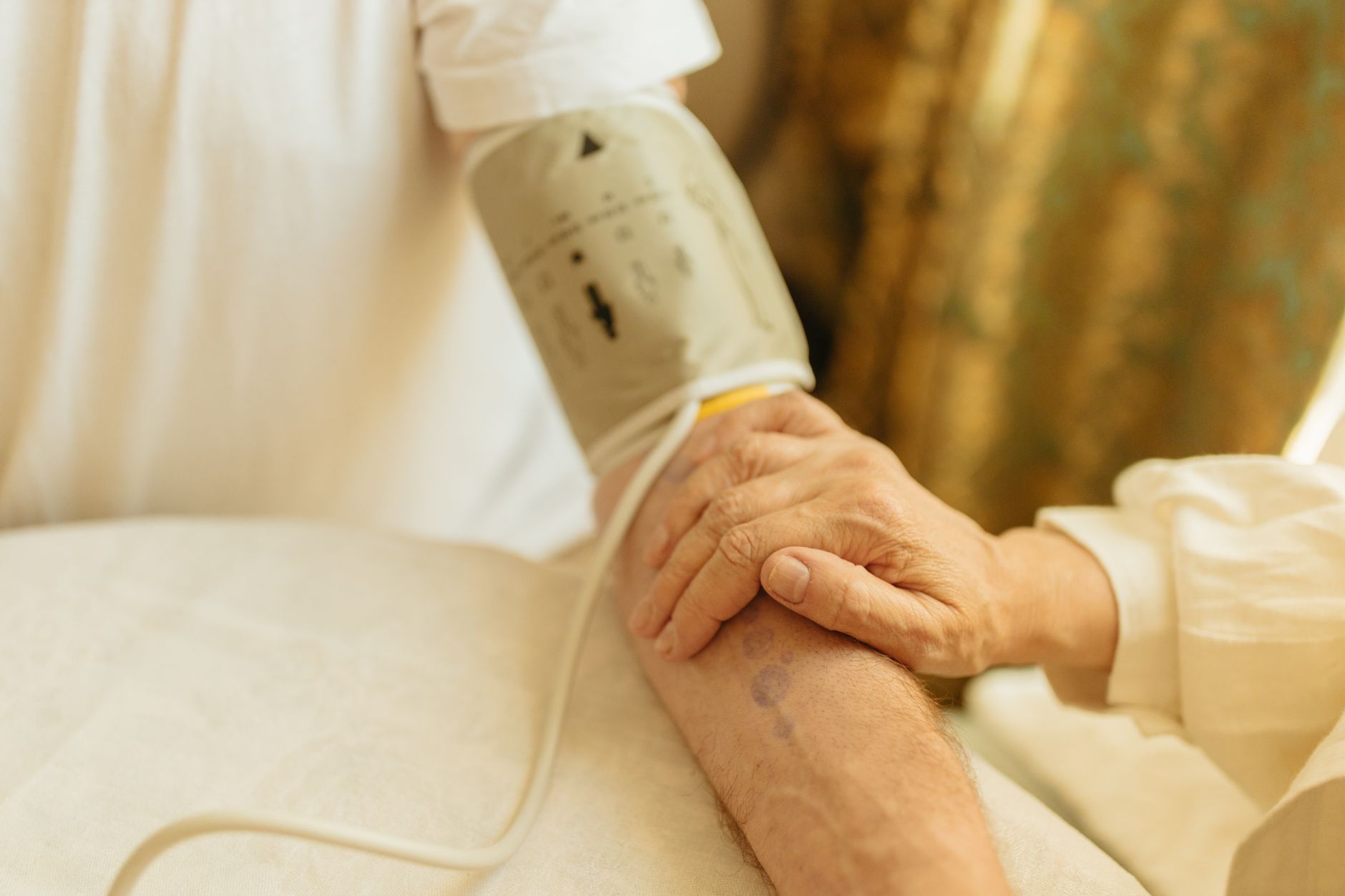
Your arm needs support, and the cuff should rest at roughly the same height as your heart. The AHA notes that an arm left hanging, or resting too low, can produce a falsely high reading, while an arm held too high can read low. Rest your forearm on a table or a cushion so the cuff sits level with your heart, and let the muscles relax rather than holding the arm up yourself.
4. Putting the cuff over clothing or using the wrong size
The cuff should sit on a bare arm, not over a sleeve, and it needs to fit properly. The AHA recommends placing the cuff directly on the skin and choosing the correct size, because a cuff that is too small or too large can skew the result. Push your sleeve up gently rather than rolling it into a tight band, which can act like a tourniquet, and check your monitor’s instructions for the right cuff size for your arm.
5. Measuring too soon after caffeine, smoking, or exercise
Coffee, nicotine, and a workout can all push your blood pressure up temporarily. The AHA advises avoiding caffeine, smoking, and exercise for at least 30 minutes before you measure. If you have just had a coffee or come back from a walk, wait it out so the reading reflects your baseline rather than a short-term spike. This is also why timing matters; for a routine that works, see the best time to take your blood pressure.
6. Talking, scrolling, or measuring with a full bladder
It is tempting to check your phone or chat while the cuff inflates, but the AHA notes that talking during a measurement can raise your reading. A full bladder can do the same, so it helps to use the bathroom first. Stay quiet and still for the whole measurement: no talking, no scrolling, no television. Just sit calmly and let the monitor do its work.
7. Taking only one reading
A single number can be misleading because blood pressure naturally varies minute to minute. The AHA suggests taking two or three readings about a minute apart and recording the average, and measuring at the same times each day for a fair comparison. One isolated high reading is rarely cause for alarm on its own; the pattern over days and weeks is what tells the real story. If your readings still seem high in a way that does not match how you feel at home, white-coat effects can play a role too, which we cover in why your reading spikes at the doctor.
When to see a doctor
Accurate home readings are most useful when you act on what they show. Contact your doctor if your readings are consistently 130/80 mmHg or higher, or if they are climbing over time. Seek emergency care right away if you have a reading higher than 180/120 mmHg together with symptoms such as chest pain, shortness of breath, weakness or numbness, vision changes, difficulty speaking, or a severe headache, as these can signal a medical emergency. When in doubt, reach out to a healthcare professional; home monitoring supports your care, it does not replace it.
Frequently asked questions
Why is my home blood pressure reading higher than at the doctor? It can happen either way. Poor technique at home, such as an unsupported arm or talking during the measurement, can inflate your number, while anxiety at the clinic can raise it there. Following the steps above and tracking readings over time helps you see your true pattern.
How many times should I take my blood pressure? The American Heart Association suggests two or three readings about a minute apart, then recording the average. Measuring at the same times each day gives you the fairest comparison.
Which arm should I use to measure blood pressure? Use the same arm each time for consistency. Some people have a small difference between arms, so it is worth checking both when you first start, then sticking with the arm that reads higher for ongoing monitoring.
Does a full bladder really affect blood pressure? Yes. The AHA lists a full bladder among the factors that can raise a reading, so using the bathroom before you measure is a simple way to keep your numbers accurate.
The bottom line
Accurate home monitoring is less about expensive equipment and more about good technique. Rest first, sit properly, support your arm at heart level, use the cuff on a bare arm, avoid caffeine and exercise beforehand, stay quiet, and average a couple of readings at the same time each day. Get these right and the numbers you record will actually be worth tracking.
Medically reviewed by: _________________ (clinician name and credential to be added)
Last reviewed: June 2026
Sources: American Heart Association (Monitoring Your Blood Pressure at Home; Getting an Accurate Blood Pressure Reading at Home); UK National Health Service (NHS, Getting your blood pressure checked); Mayo Clinic (Get the most out of home blood pressure monitoring).
Track your BP free in CardioVibe
Good technique only pays off if you keep a record. CardioVibe lets you log every reading in seconds, averages them for you, and turns scattered numbers into clear trends you can bring to your next appointment.
Download CardioVibe
Take control of your blood pressure with small daily habits, and see exactly what's working as your readings improve.
Download CardioVibe
Keep every reading in one place, spot patterns early, and bring a clear history to your next GP appointment.