D — Habits & measurement
Refresh: best time to take blood pressure (updated)

The best time to take blood pressure is the same time each day, measured twice: once in the morning before food, caffeine, or medication, and once in the evening. Consistency is what makes home readings useful, because it lets you compare like with like and spot a real trend instead of random noise. Here is the updated routine and the small details that make readings reliable.
This is a refreshed guide to timing your readings, in line with current American Heart Association (AHA) advice on home monitoring. If you measure at home, a few steady habits turn scattered numbers into information you and your doctor can actually trust.
Why timing matters
Blood pressure is not a fixed number. It rises and falls across the day, dipping overnight and often peaking in the morning. Because of that natural rhythm, a reading only means something when you can compare it with others taken under the same conditions. The AHA recommends measuring at the same times daily for exactly this reason.
That is also why a single high or low reading rarely tells you much on its own. What you are really after is the pattern over days and weeks, which is where consistent timing pays off.
The best times of day to take blood pressure
The AHA suggests taking your blood pressure twice a day, and keeping those times steady:
- Morning, before you eat, before any caffeine, and before you take blood pressure medication. Give yourself a little time after waking rather than measuring the moment you get out of bed.
- Evening, at a consistent time before your evening meal or well after it.
Taking a morning and an evening reading captures both ends of your daily rhythm. If your doctor has asked for a specific schedule, follow that instead, as some situations call for different timing.
For a simple way to fit this into your day, see our daily routine for checking blood pressure, and for how many days to measure, our guide on how often to check.
What to avoid before a reading
A few things can push a reading up temporarily and make it misleading. The AHA advises avoiding these in the 30 minutes before you measure:
- caffeine, including coffee and tea
- exercise
- smoking
It also helps to empty your bladder first, since a full bladder can raise the reading. Try not to measure when you are stressed, in pain, or rushing, as all of these nudge the numbers up.
How to measure correctly
Timing only helps if your technique is consistent too. The AHA recommends:
- Sit quietly for 5 minutes before you start, in a chair with your back supported.
- Keep both feet flat on the floor, legs uncrossed.
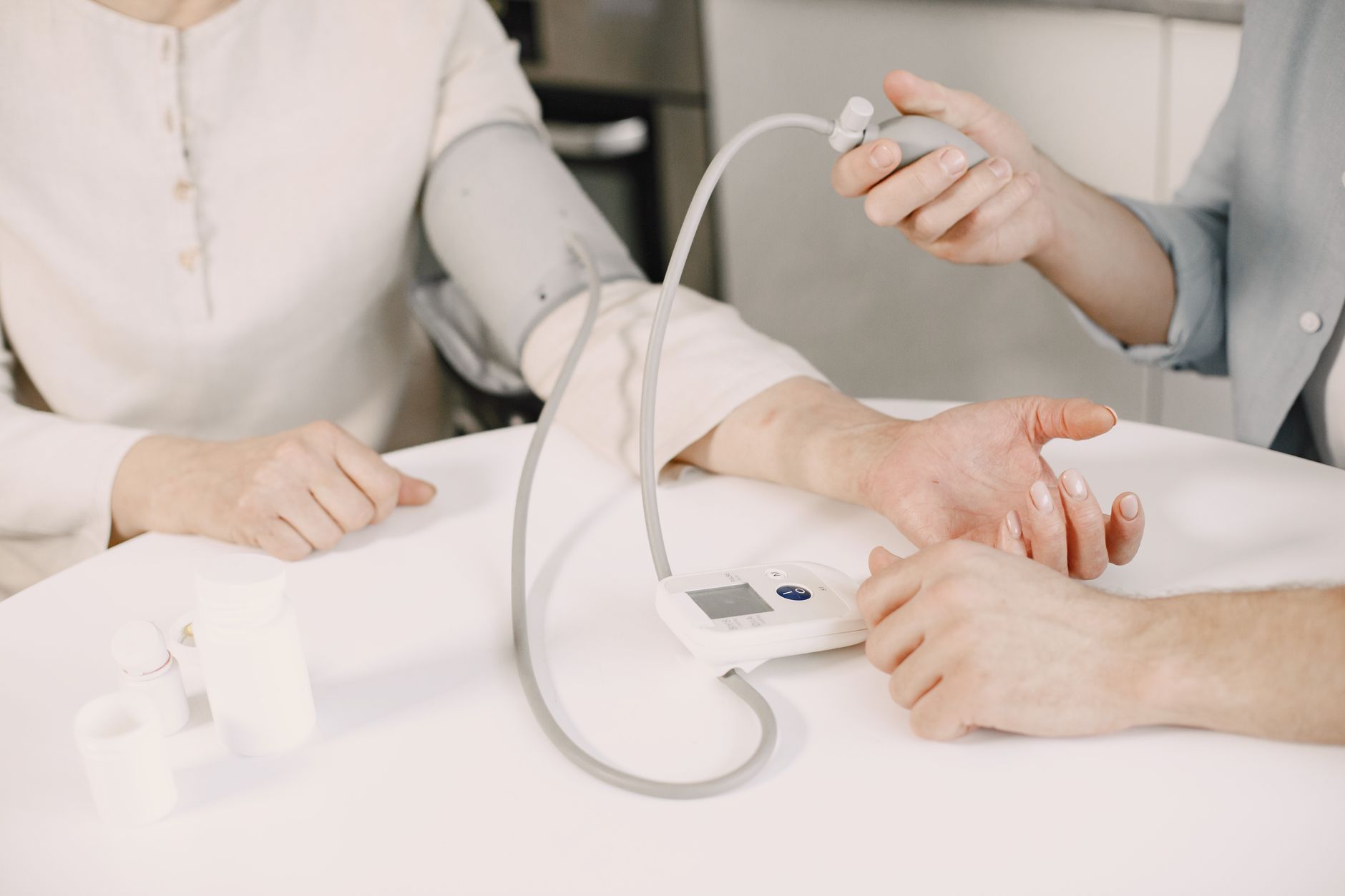
- Rest your arm on a table so the cuff is at heart level.
- Put the cuff on a bare arm, not over clothing.
- Stay still and do not talk while the monitor runs.
- Take 2 or 3 readings about a minute apart and record the average.
Taking more than one reading matters because the first is often the highest. Our guide on taking your blood pressure twice and averaging it explains why. For the full set-up, see how to measure blood pressure at home.
Make it a habit that sticks
The hardest part of home monitoring is not the technique, it is remembering to do it consistently. Attaching your readings to something you already do each day, such as making your morning coffee or brushing your teeth at night, helps the habit hold. Recording each reading as you go means you build a trend you can actually see, rather than relying on memory. If you miss a reading, there is no need to make it up at an odd hour, simply pick up your usual times the next day, since a reading taken off-schedule is harder to compare.
Over a week or two, that record shows whether your numbers are steady, rising, or responding to a change you have made, and it gives your doctor far better information than an occasional reading in the clinic.
When to see a doctor
Home monitoring supports your care, it does not replace it. Contact your doctor if your readings are consistently 130/80 mmHg or above, if they are climbing over time, or if you feel unwell.
Seek urgent help if a reading reaches 180/120 mmHg or higher, especially with chest pain, shortness of breath, weakness, trouble speaking, vision changes, or a severe headache, as these can signal a hypertensive crisis. Never start, stop, or change blood pressure medication based on home readings without speaking to your doctor first.
Frequently asked questions
When is the best time of day to take blood pressure?
The AHA suggests measuring twice daily at consistent times, typically in the morning before food, caffeine, and medication, and again in the evening. Keeping the times steady is what makes the readings comparable.
Should I take my blood pressure before or after eating?
Before is better for your morning reading, and the AHA also advises avoiding caffeine for 30 minutes beforehand. A full stomach and caffeine can both affect the result, so measuring before food keeps conditions consistent.
How long should I sit before taking my blood pressure?
Sit quietly for about 5 minutes first, with your back supported and feet flat, according to the AHA. Measuring straight after moving around can give a falsely high reading.
Is morning or evening blood pressure more important?
Both add value, which is why the AHA suggests measuring twice. Morning readings catch the natural early peak and evening readings show how the day settles, so the pair together tells you more than either alone.
This is educational information, not medical advice. If you have questions about your blood pressure or take medication for it, speak with your doctor. For guidance, see the American Heart Association or the NHS. In an emergency, call your local emergency number.
Start this habit in CardioVibe and watch your trend take shape over time.
Last reviewed: October 2026
Download CardioVibe
Take control of your blood pressure with small daily habits, and see exactly what's working as your readings improve.
Download CardioVibe
Keep every reading in one place, spot patterns early, and bring a clear history to your next GP appointment.