D — Habits & measurement
How to Measure Blood Pressure Correctly at Home
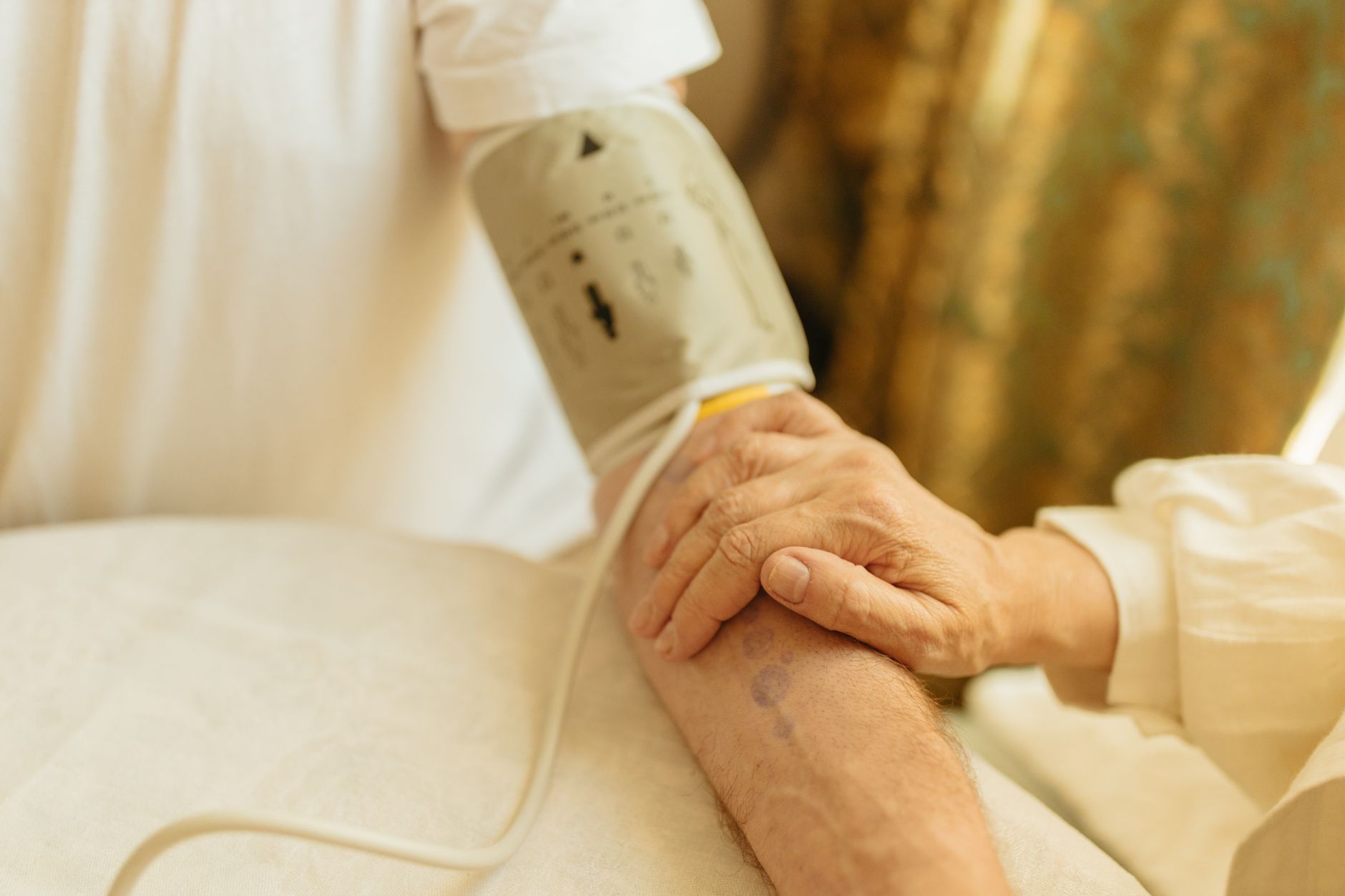
To measure blood pressure at home correctly, sit quietly for five minutes first, then rest your back against a chair with both feet flat on the floor. Support your arm at heart level, wrap the cuff over bare skin, stay still and silent, and take two or three readings a minute apart.
An accurate home reading depends far more on how you sit and prepare than on which monitor you own. The same arm, measured two different ways, can give numbers that are 10 mmHg apart or more. That gap matters, because your readings help you and your doctor decide whether your blood pressure is under control. This guide covers the correct technique step by step, the timing that gives you reliable numbers, and the common slip-ups that quietly push readings up or down.
How to measure blood pressure at home, step by step
The American Heart Association (AHA), Mayo Clinic, and the UK’s NHS all describe broadly the same method. Getting it right is mostly about preparation and position.
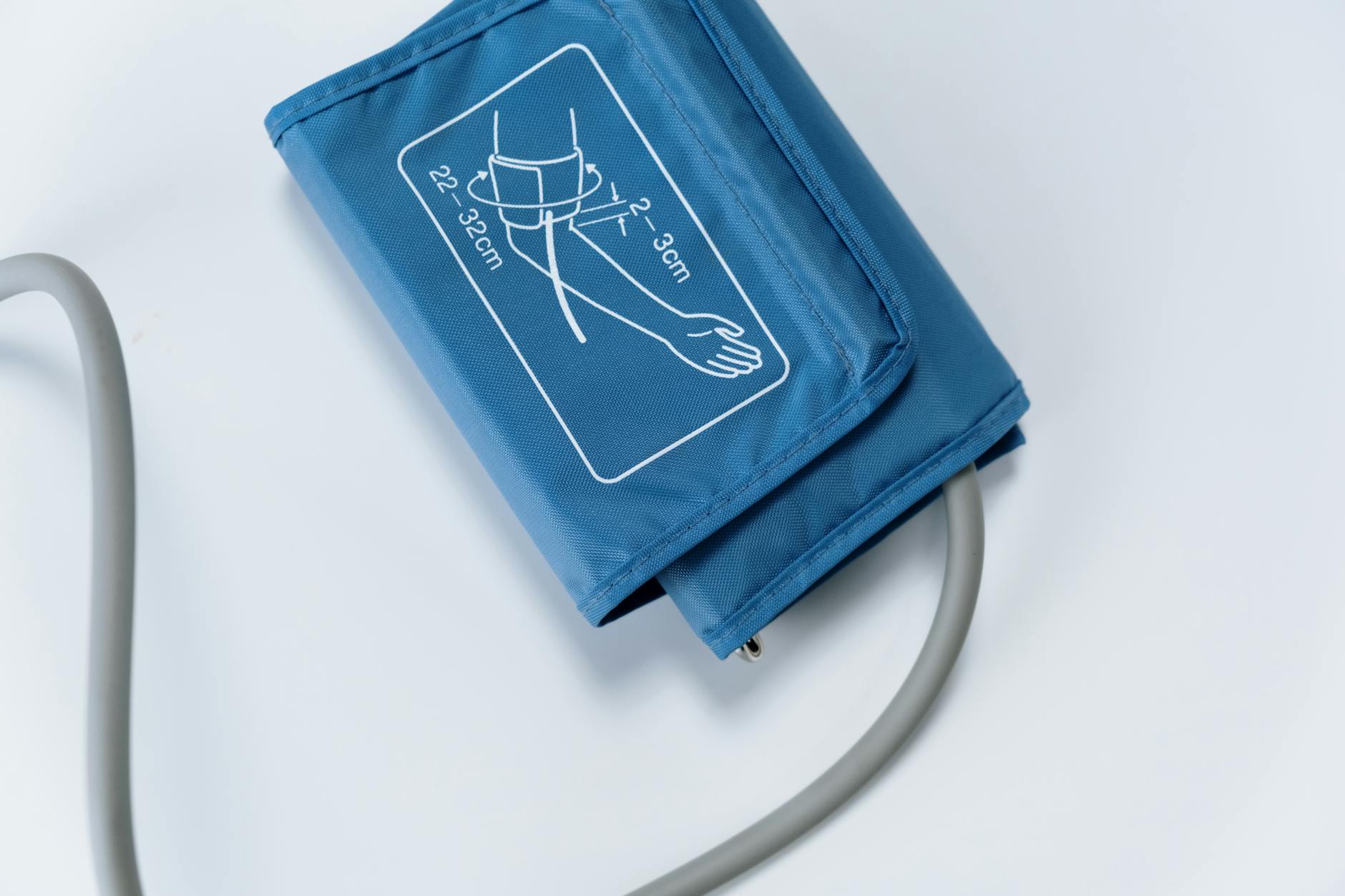
Start with a validated upper-arm monitor. The AHA recommends an automatic, cuff-style monitor that wraps around your upper arm, rather than a wrist or finger device, because upper-arm monitors are less sensitive to position and tend to be more reliable. Check that the cuff fits your arm, since a cuff that is too small or too large will give readings that are off.
Then follow these steps:
- Prepare. Avoid caffeine, exercise, and smoking for at least 30 minutes beforehand, and empty your bladder. A full bladder can nudge your reading higher.
- Rest for five minutes. Sit somewhere quiet without talking or looking at your phone. This quiet rest is the step people skip most, and it makes a real difference.
- Sit properly. Keep your back supported against the chair, both feet flat on the floor, and legs uncrossed.
- Position your arm. Rest it on a table so the cuff sits at about the same height as your heart. Wrap the cuff over bare skin, with the lower edge about two centimetres above the bend of your elbow.
- Stay still and quiet while the monitor inflates. Do not talk.
- Take two or three readings about a minute apart, and record them all. Readings often drop a little after the first, so an average gives you a truer picture than a single number.
The best time of day to take your reading
Blood pressure rises and falls throughout the day, so when you measure changes what you see. The AHA suggests measuring at the same times each day, usually once in the morning and once in the evening.
Take the morning reading before you eat, before any blood pressure medication, and before coffee or exercise. Take the evening reading before your evening meal, or at least a couple of hours after it. Avoid measuring straight after a stressful moment or a workout, when your numbers are naturally higher. For more on timing, see our guide to the best time of day to take your blood pressure, and for how often to check, read how often you should check your blood pressure.
Consistency is the real goal. Two readings taken at the same times each day, over a week or two, tell you far more than a handful of random checks.
Common mistakes that skew your readings
Several small things can throw a measurement off, almost always in the direction of a higher number. According to the AHA, the most common culprits are:
- Talking during the measurement, which can raise the systolic (top) number.
- An unsupported back or dangling feet, which can lift readings.
- Crossing your legs, which tends to push numbers up.
- A cuff worn over clothing instead of bare skin.
- A full bladder.
- Arm position. If your arm hangs below heart level, the reading reads high. If it is propped too high, it reads low. Resting the arm on a table at heart height fixes this.
A single surprising number is rarely the whole story. If a reading startles you, wait a couple of minutes, settle, and take it again before drawing any conclusions.
How to read your numbers
Blood pressure is written as two numbers, systolic over diastolic, in millimetres of mercury (mmHg). The top number is the pressure when your heart beats, and the bottom number is the pressure when it rests between beats.
According to the AHA, the categories are normal at less than 120/80 mmHg, elevated at 120 to 129 systolic with a diastolic under 80, stage 1 hypertension at 130 to 139 systolic or 80 to 89 diastolic, and stage 2 hypertension at 140 or higher systolic or 90 or higher diastolic. A reading above 180/120 mmHg is a hypertensive crisis and needs urgent attention.
UK thresholds are framed a little differently. The NHS generally considers high blood pressure to be 140/90 mmHg or higher at a clinic, or an average of 135/85 mmHg or higher when measured at home. Home averages are treated as slightly lower because being at a surgery can lift readings. One high reading on its own does not mean you have high blood pressure, since doctors look at the average across many readings. For a fuller breakdown, see our complete guide to measuring blood pressure at home and our guide to understanding your blood pressure readings.
When to see a doctor
Home monitoring is a helpful habit, not a replacement for medical care. Some situations need prompt attention:
- Call emergency services if you get a reading higher than 180/120 mmHg along with chest pain, shortness of breath, weakness or numbness, vision changes, difficulty speaking, or a severe headache, as these can signal a medical emergency.
- Contact your doctor soon if your home readings are consistently 130/80 mmHg or above, if they are climbing over time, or if you feel unwell.
- Check in regularly if you have been diagnosed with high blood pressure, even when you feel fine, so your plan stays on track.
Bring your log to appointments so your doctor can see the full picture. This guide is for general information and is not a substitute for personalised medical advice.
Frequently asked questions
How do I measure my blood pressure at home accurately? Use a validated upper-arm monitor, rest quietly for five minutes, sit with your back supported and feet flat, keep your arm supported at heart level, and stay silent during the reading. Take two or three readings a minute apart and average them.
Which arm should I use to measure blood pressure? The AHA suggests using the same arm each time for consistency. If your two arms give noticeably different readings, mention it to your doctor, and use the arm with the higher numbers for future checks.
Why is my blood pressure higher at home than at the doctor? It can go either way. Readings can run higher at a clinic (white coat effect) or higher at home. Taking readings correctly and keeping a consistent log helps you and your doctor see your true pattern. See our guide on white coat hypertension.
How many times should I measure my blood pressure? Take two or three readings about a minute apart in each session and record them all, since the first is often the highest. An average across readings is more reliable than any single number.
Medically reviewed by: _________________ (clinician name and credential to be added)
Last reviewed: June 2026
Sources: American Heart Association (Monitoring Your Blood Pressure at Home; Understanding Blood Pressure Readings); Mayo Clinic (Get the most out of home blood pressure monitoring); UK National Health Service (NHS, High blood pressure).
Track your readings in CardioVibe
Measuring correctly is only half the habit. Log each reading free in CardioVibe in seconds, watch your trends build over time, and bring a clear record to your next appointment.
Download CardioVibe
Take control of your blood pressure with small daily habits, and see exactly what's working as your readings improve.
Download CardioVibe
Keep every reading in one place, spot patterns early, and bring a clear history to your next GP appointment.